

An evangelist has the ability to powerfully and effectively share the gospel, leading others to a personal conversion experience with Christ.
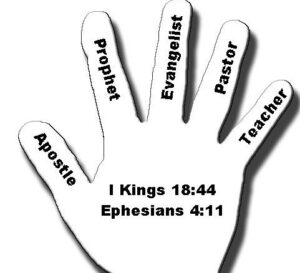 A person with the gift of evangelism is often someone who travels from place to place to preach the gospel and call for repentance. The human authors of the four Gospels—Matthew, Mark, Luke, and John—are sometimes called “the Evangelists” because they recorded the ministry of Jesus Christ—“good news,” indeed. Ephesians 4:11–13 states, “Christ himself gave the apostles, the prophets, the evangelists, the pastors and teachers, to equip his people for works of service, so that the body of Christ may be built up until we all reach unity in the faith and in the knowledge of the Son of God and become mature, attaining to the whole measure of the fullness of Christ.”
In Acts 21:8 Philip is named as an evangelist, and in 2 Timothy 4:5 Paul exhorts Timothy to do the work of an evangelist. These are the only three uses of the word evangelist in the entire Bible. Other people could be considered “evangelists” in that they preached the good news, including Jesus Himself (Luke 20:1) and Paul (Romans 1:15), but Philip is the one person specifically called an evangelist in Scripture.Philip had been one of the seven deacons chosen so that the apostles could do their work of teaching and prayer (Acts 6:3). Evidently, Philip had settled in Caesarea and had lived there for some 20 years before Paul arrived in Acts 21. Philip’s previous evangelistic work was in Samaria (Acts 8:4–8). He “proclaimed the Messiah” to the Samaritans (verse 5) and performed miracles, including casting out demons and healing paralytics. It is noteworthy that Philip performed water baptism in the name of Jesus, but the baptism of the Holy Spirit did not occur until the apostles came to Samaria.
Peter and John’s presence in Samaria and the Spirit’s indwelling of the believing Samaritans (Acts 8:17) confirmed Philip’s ministry there. As an evangelist, Philip had preached the gospel, and, when the Samaritans believed it and received the Spirit, they were welcomed into the church. Where there had previously been division and animosity between Jews and Samaritans, there now existed the spiritual bond of love (Colossians 3:14). Philip’s trailblazing efforts laid the foundation for his hearers to receive the Holy Spirit by faith. The evangelist’s pre-work unto salvation is what those called evangelists have done ever since.
Philip’s ministry as an evangelist continues in Acts 8 as he is led by an angel to go the desert road to Gaza. On the road he meets an Ethiopian eunuch—a court official to the queen of Ethiopia. Philip opens the man’s understanding of the Word of God, and the eunuch is saved. Philip baptizes the man, and the Holy Spirit snatches Philip away (Acts 8:39). Philip later “appeared at Azotus and traveled about, preaching the gospel in all the towns until he reached Caesarea” (verse 40). Everywhere he went, Philip shared the gospel. That’s what evangelists do.
Timothy was told to do the pre-salvation preaching that is the “work of an evangelist” (2 Timothy 4:5). This same preaching of the good news is the general call to the disciples in the Great Commission and to all of us to the end of the age (Matthew 28:16–20). In Jude 1:3, all saints are to contend earnestly for the faith delivered to them, and, in verse 23 we are to “save others by snatching them from the fire.”
The office of evangelist will be needed until the church reaches the maturity of Christ Himself (Ephesians 4:13). Good news is meant to be shared. And we have the best news of all—Jesus died and rose again and saves all who will call on Him (Romans 10:9–13).
1. Evangelists often use a relationship-based approach, inviting others to make a decision for Christ through one-on-one or small group settings.
2. The gift is used to grow the church by helping individuals understand and respond to the gospel, which can lead to personal transformation.
3. While the goal is conversion, the evangelist is not seen as being forceful but as offering a relationship with God as a gift